
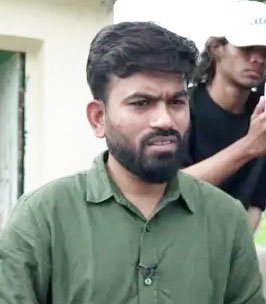

Abhijeet Dipke: Who Is the Face Behind the Cockroach Janta Party Movement?
By The Currents | September 11, 2026
abhijeet dipke has emerged as one of the most talked-about young political communicators in India in 2026.
What began with a short, satirical social-media post quickly developed into the Cockroach Janta Party (CJP) movement. It attracted millions of online followers and highlighted unemployment, irregularities in competitive exams, and youth representation.
The rise of abhijeet dipke has been particularly notable.
His political influence did not begin with a traditional political office or a major established party.
Instead, his influence grew through social media, political communication, satire and youth mobilization.
Reuters described Dipke as a 30-year-old political communications strategist who became a prominent figure in India’s youth protest movement during 2026.
Who Is Abhijeet Dipke?
Abhijeet Dipke is a political communications strategist.
He founded the Cockroach Janta Party, a satirical political platform that evolved into a youth-led movement.
This profile centers on abhijeet dipke.
His name became widely known after a post on X in May 2026 responding to controversial remarks in which unemployed young people were compared to cockroaches. Dipke’s response — asking what would happen if “all cockroaches” came together — rapidly spread online.
The idea became the foundation for the Cockroach Janta Party.
Rather than functioning initially like a conventional political party, CJP operated largely as a digital movement. Its messaging used humor, memes and social-media culture to address serious political and economic concerns affecting young Indians.
NDTV reported in May that the CJP had attracted more than 19 million Instagram followers within days of its launch.
How the Cockroach Janta Party Began
The story of CJP is closely connected to the power of social media in modern Indian politics.
According to Reuters, Dipke’s viral post came after comments by Supreme Court judge Surya Kant that were interpreted as comparing unemployed youth to cockroaches. The judge later said his comments had been misconstrued.
Dipke turned the controversy into satire.
Instead of allowing the term to remain an insult, the emerging movement effectively reclaimed it as an identity for young people who felt ignored by the political establishment.
The phrase became a rallying point.
Within a short period, CJP moved from memes and social-media posts toward real-world political mobilization.
From Social Media to Street Protests
One of the most important aspects of Dipke’s rise is the transition from digital activism to street-level protest.
The movement increasingly focused on problems facing students and young job seekers, including:
- Unemployment
- Government recruitment
- Competitive examination delays
- Alleged examination-paper leaks
- Pressure on students preparing for competitive examinations
- Youth representation in politics
- Government accountability
The movement eventually organized protests in Delhi and elsewhere.
Reuters reported that the demonstrations became a major youth-led political mobilization and that protesters demanded accountability over issues surrounding examination irregularities and unemployment.
The Education and Examination Crisis
Education and competitive examinations became central themes of Dipke’s public campaigning.
For millions of Indian students, government examinations represent a major route toward stable employment. Delays, cancellations, alleged paper leaks and recruitment uncertainty can therefore have consequences far beyond a single examination.
Dipke and the CJP movement used these frustrations as a central part of their messaging.
The movement argued that young people spend years preparing for examinations while facing financial pressure, uncertainty and limited employment opportunities.
Recent events have kept those concerns in the spotlight.
In September 2026, Dipke criticized the government following the death of an MPSC aspirant in Pune, arguing that students from rural areas face severe financial and systemic pressures during competitive-exam preparation.
Abhijeet Dipke and Youth Politics
Dipke’s importance goes beyond the Cockroach Janta Party itself.
His rise demonstrates how India’s younger generation is increasingly using social media as a political tool.
Traditional political communication often depends on:
- Political rallies
- Newspapers
- Television debates
- Party organizations
- Posters and advertisements
Dipke’s approach has been different.
His movement has relied heavily on:
- X
- Viral videos
- Memes
- Satirical messaging
- Short-form political content
- Direct communication with young audiences
This strategy helped CJP reach people who might not normally participate in traditional political organizations.
His Background in Political Communication
Dipke has been described in recent reporting as a political communications professional with experience in digital political messaging.
The Times of India reported that he studied journalism in Pune and later moved to the United States for higher education, while also reporting that he had worked with the Aam Aadmi Party’s social-media team between 2020 and 2023.
Other reports have described his academic and professional background somewhat differently, including conflicting accounts about his specific undergraduate course and postgraduate program. Because of these discrepancies, claims about his education should be treated carefully unless independently confirmed.
What is clearer is the importance of digital communication in his career.
His ability to turn a short message into a larger political narrative has become one of the defining features of his public profile.
His Connection With the Aam Aadmi Party
Before becoming associated with CJP, Dipke had links to the Aam Aadmi Party’s digital ecosystem.
The Economic Times reported that he volunteered with the AAP social-media team from 2020 to 2023 and had publicly expressed appreciation for former Delhi deputy chief minister Manish Sisodia.
This background is significant because it helps explain his understanding of online political communication.
However, the emergence of the Cockroach Janta Party represented a very different kind of political project.
Instead of operating inside an established party structure, CJP developed around a viral digital identity and a specific set of youth concerns.
The Protest Movement Gains National Attention
As the movement expanded, Dipke became increasingly visible outside social media.
The protests eventually reached Delhi’s Jantar Mantar, where demonstrators demanded government action over education and examination-related issues.
Reuters reported that the movement became one of the most significant youth protest campaigns of 2026 and that Dipke became its most recognizable public face.
The Financial Times similarly described Dipke as the face of India’s “Cockroach” youth movement and reported that the campaign evolved from online satire into a major protest movement.
Why Abhijeet Dipke Became Popular
There are several reasons behind Dipke’s rapid rise.
1. Simple and Memorable Messaging
The original message was extremely short.
That made it easy to share, remix and turn into memes.
2. Humor
Political communication can often appear complicated or distant.
CJP used humor to make political criticism more accessible to younger audiences.
3. Youth-Focused Issues
Unemployment and examination problems directly affect millions of young Indians.
The movement therefore connected with concerns that were already widespread.
4. Social Media Strategy
CJP was designed for the internet.
Its slogans, graphics and videos were easily shareable across social platforms.
5. A Sense of Collective Identity
The word “cockroach,” which began as a controversial description, was transformed into a symbol of collective resistance.
That reversal helped create a strong identity around the movement.
Dipke’s Views on Unemployment and Young Indians
Unemployment has been one of the central themes of Dipke’s political messaging.
For young Indians, particularly those preparing for government examinations, employment is often connected to financial independence, family expectations and social mobility.
Dipke’s movement has argued that the political system needs to pay greater attention to these concerns.
The broader debate is not simply about the number of jobs available. It also involves the quality of employment, recruitment transparency, examination reliability and the amount of time young people spend preparing for competitive examinations.
Recent Controversies and Statements
Dipke has continued to speak on a wide range of social and political issues.
In August 2026, he criticized the Maharashtra government’s support for families of Adivasi students who died while attending ashram schools, arguing that the compensation was inadequate.
He has also raised questions about rural school infrastructure and the use of public funds.
In August, The Times of India reported that Dipke advocated using PM CARES funds to improve infrastructure in rural government schools and questioned how such resources could be used to strengthen basic education facilities.
These statements indicate that his political messaging has expanded beyond examination reform into broader questions about education, public spending and government accountability.
Social Media and the Future of CJP
One of the biggest questions surrounding Abhijeet Dipke is what happens next.
Can a movement born from social media become a lasting political organization?
That remains uncertain.
Social-media movements can grow extraordinarily quickly, but maintaining momentum is much harder.
A successful political organization generally requires:
- Local leadership
- Organizational structures
- Policy positions
- Volunteers
- Funding
- Electoral strategy
- Long-term public engagement
CJP’s future will therefore depend on whether it can move beyond viral posts and protests and develop a sustainable political program.
Is Abhijeet Dipke a Politician?
Calling Dipke simply a politician may not fully explain his role.
He emerged primarily as a political communicator and movement organizer rather than as a conventional elected representative.
His influence comes from his ability to create narratives, mobilize online communities and translate social-media attention into public demonstrations.
That makes him part of a growing category of political figures whose influence is built outside traditional party structures.
Abhijeet Dipke’s Growing National Profile
Within a few months, Dipke went from being relatively unknown outside political-communication circles to becoming a nationally recognized figure.
His story reflects several major trends in Indian politics:
Young voters are politically engaged.
Social media can rapidly create political movements.
Humor can become a powerful form of political communication.
Employment and education remain major concerns for India’s youth.
Digital activism can increasingly spill into real-world protests.
Reuters’ reporting on Dipke’s rise highlighted precisely this transformation — from a viral social-media post to a major youth protest movement.
What Lies Ahead for Abhijeet Dipke?
The next phase of Dipke’s career could be more complicated than the movement’s initial rise.
The CJP movement has already demonstrated its ability to attract attention. The challenge now is converting that attention into long-term political influence.
Will CJP remain primarily a satirical digital platform?
Will it become a formal political organization?
Will Dipke enter electoral politics?
Or will he continue working as a political communicator and activist?
Those questions remain open.
For now, Abhijeet Dipke represents a new style of political mobilization in India — one where memes, social media, satire and youth frustration can combine to create a movement capable of reaching the streets.
Conclusion
Abhijeet Dipke’s story is one of the most striking examples of India’s changing political landscape in 2026.
His journey from political communication to the creation of the Cockroach Janta Party shows how quickly an idea can spread when it connects with an existing sense of frustration.
The movement’s success has not simply been about one viral post. It has been about broader concerns surrounding unemployment, examinations, education, government accountability and the political voice of young Indians.
Whether the Cockroach Janta Party becomes a lasting political force remains to be seen.
But one thing is already clear: Abhijeet Dipke has demonstrated the growing power of social media to reshape India’s political conversation.
Frequently Asked Questions
Who is Abhijeet Dipke?
Abhijeet Dipke is a political communications strategist and founder of the Cockroach Janta Party, a satirical youth-oriented political movement that emerged in 2026.
What is the Cockroach Janta Party?
The Cockroach Janta Party, or CJP, began as a satirical digital movement and developed into a broader youth protest campaign focused on issues including unemployment, examination irregularities and government accountability.
Why did Abhijeet Dipke become famous?
He became widely known after a viral social-media response to controversial remarks concerning unemployed youth. The post became the inspiration for CJP.
What issues does Abhijeet Dipke focus on?
His public campaigns have focused on youth unemployment, competitive examinations, education, government accountability and broader social issues. Recent statements have also addressed rural education and the welfare of marginalized communities.
Is Abhijeet Dipke associated with the AAP?
Reports say Dipke volunteered with the AAP’s social-media team from 2020 to 2023. His later work with CJP represents a separate political initiative.